Coronavirus: Who should wear a face mask or face covering?
This is in line with new World Health Organisation (WHO) advice. It says non-medical face coverings should be worn in public where social distancing is not possible.
What are the face covering rules on public transport?
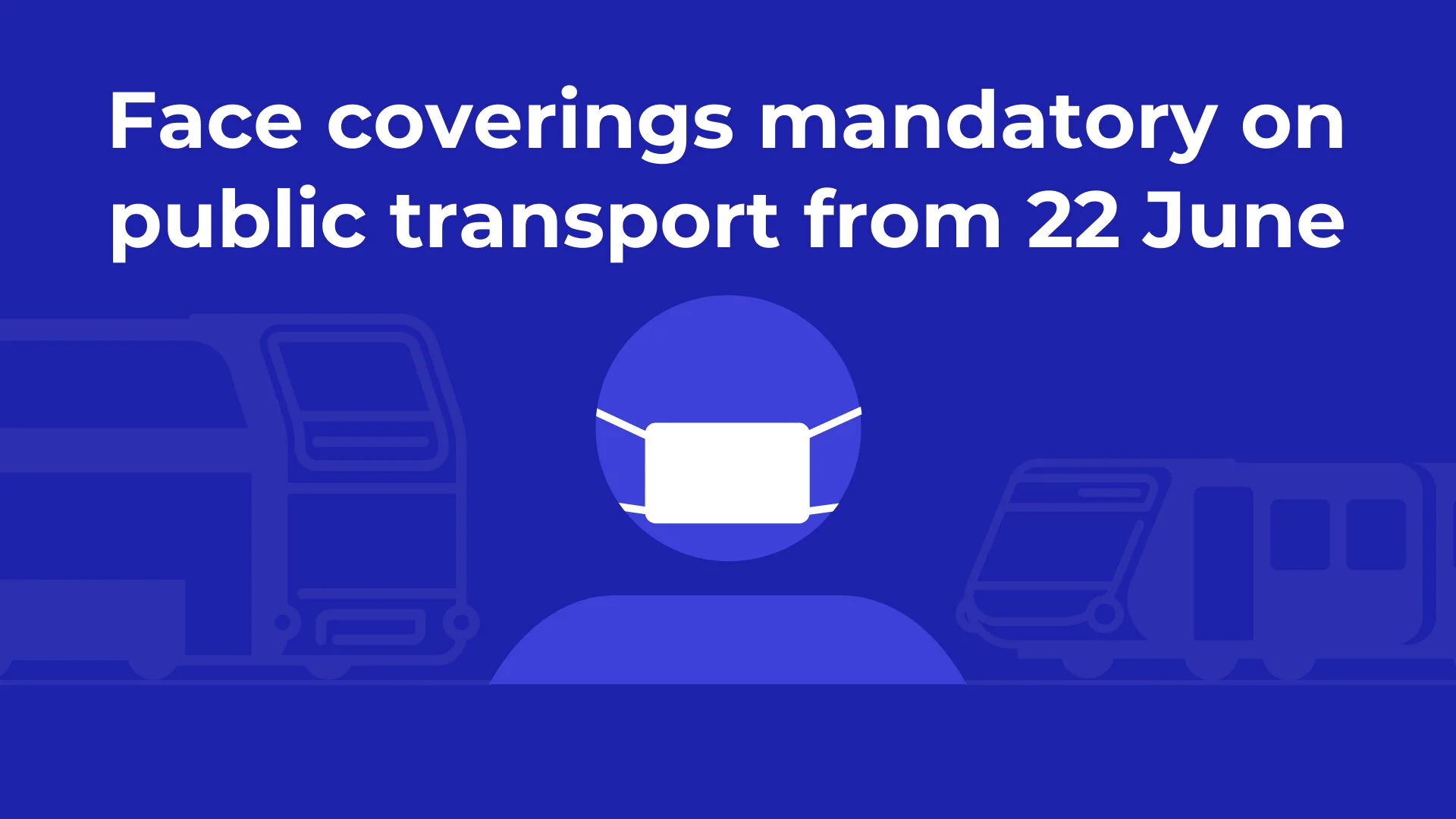
Anyone travelling by bus, train, ferry or plane in England should wear a face covering from Monday 22nd June 2020 - to help reduce the risk of coronavirus transmission.
The new rules coincide with a further easing of lockdown - including the return to class of some secondary school pupils and the reopening of non-essential shops. The number of people using public transport is expected to increase.
The government stresses people should:
Continue home working if possible
Avoid public transport if they can't work from home
Avoid the rush hour on public transport
Some passengers will be exempt from the new rules including:
Children under 11
People with disabilities
Those with breathing difficulties
Anyone travelling with someone who relies on lip reading
If it is "reasonably necessary" for you to eat or drink you can remove the face covering to do so. The rules will apply only on public transport - not while waiting - but the rail industry will ask people to cover their face as they enter a station.
People could be refused travel if they don't follow the rules. They could also be fined, but this will be the last resort. Public transport excludes cruise ships, school transport, taxis and private hire vehicles. However, ride-sharing company Uber is making face coverings compulsory.
How do the different types of masks work?
3 ply Surgical masks
Also called a medical mask, a surgical mask is a loose-fitting disposable mask that protects the wearer's nose and mouth from contact with droplets, splashes and sprays that may contain germs. A surgical mask also filters out large particles in the air. Surgical masks may protect others by reducing exposure to the saliva and respiratory secretions of the mask wearer.
N95 masks
Actually a type of respirator, an N95 mask offers more protection than a surgical mask does because it can filter out both large and small particles when the wearer inhales. As the name indicates, the mask is designed to block 95% of very small particles. Some N95 masks have valves that make them easier to breathe through. With this type of mask, unfiltered air is released when the wearer exhales.
Health care providers must be trained and pass a fit test to confirm a proper seal before using an N95 respirator in the workplace. Like surgical masks, N95 masks are intended to be disposable. However, researchers are testing ways to disinfect N95 masks so they can be reused. Some N95 masks, and even some cloth masks, have one-way valves that make them easier to breathe through. But because the valve releases unfiltered air when the wearer breathes out, this type of mask doesn't prevent the wearer from spreading the virus. For this reason, some places have banned them.
Cloth masks
While surgical and N95 masks are in short supply and must be reserved for health care providers, cloth masks are easy to find and can be washed and reused. Asking everyone to wear cloth masks can help reduce the spread of the coronavirus by people who have COVID-19 but don't realise it. And countries that required face masks, testing, isolation and social distancing early in the pandemic seem to have had some success slowing the spread of the virus.
Cloth masks are cheap and simple to make. Instructions are easy to find online. Masks can be made from common materials, such as sheets made of tightly woven cotton.
Info found at:
https://www.bbc.co.uk/news/health-51205344
https://www.mayoclinic.org/diseases-conditions/coronavirus/in-depth/coronavirus-mask/ art-20485449