Simple yet Effective Exercises You Can Do at Your Desk
Working 40 hours a week—or even more, when the busy season comes around—helping your kids with their homework, taking care of your dog, cooking dinner, and all that commuting leaves little to no time to get in your workout. This lack of activity doesn’t just affect your health. It can have a direct impact on your work performance and engagement.
To save you the hassle of searching the web for solutions, we’ve chosen some exercises you can do right at your desk.
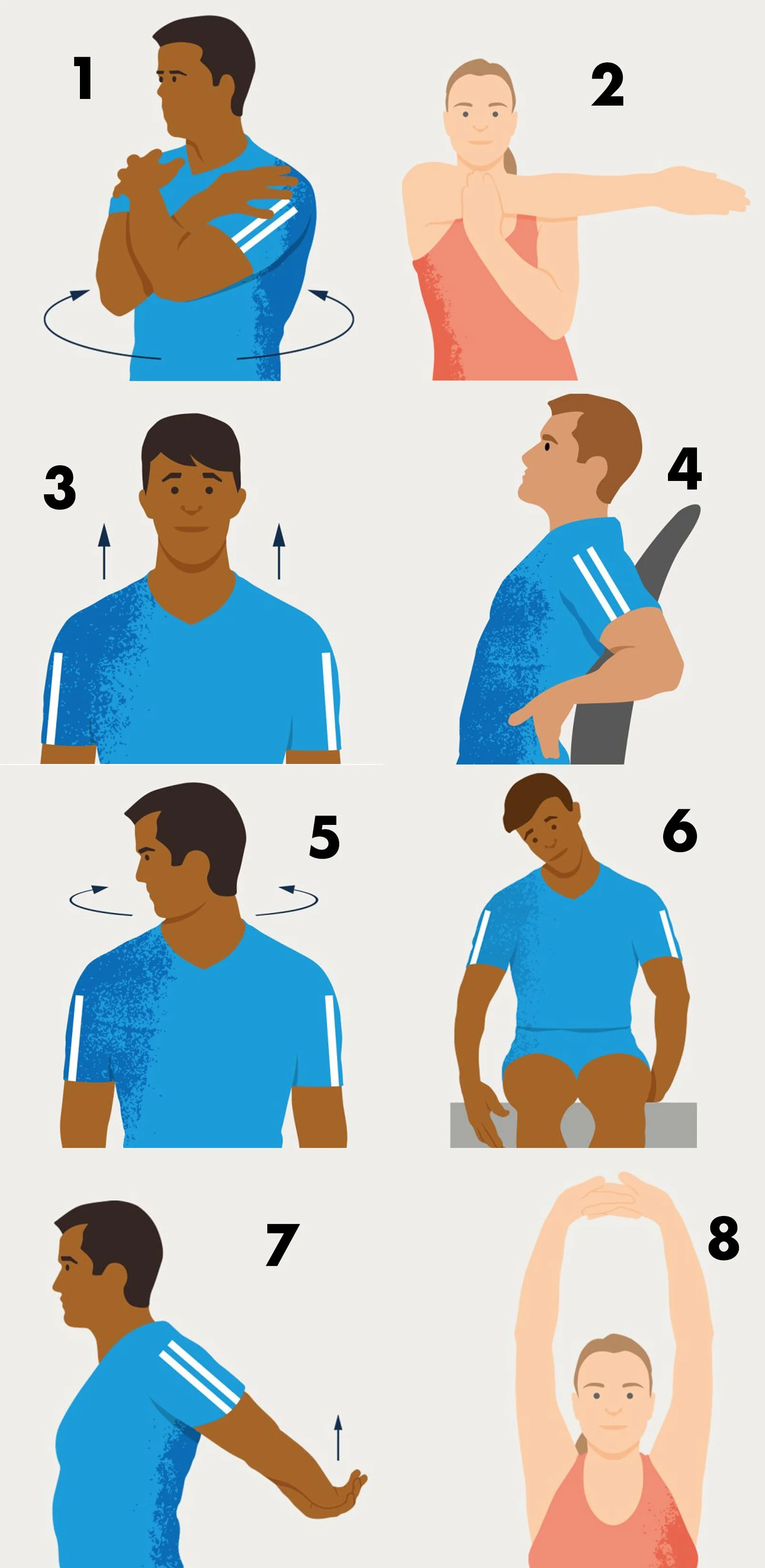
1. Seated spinal rotation
While seated, cross your arms over your chest.
Grab your shoulders.
Rotate your upper body from the waist, turning gently from left to right as far as feels comfortable.
You should feel a tension on both side of your lower back as it stretches out.
2. Posterior shoulder stretch
Hold one arm across your body.
Pull your elbow into your chest.
You should feel your shoulder gently stretching.
3. Shoulder shrugs
Gently lift your shoulders.
Let them slowly fall.
You should feel tension being released as your shoulders drop.
4. Sitting back extensions
Sit straight with your feet together.
Put the palms of your hands into the small of your back.
Lean back over your hands, feeling your lower back stretch out.
5. Neck rotations
Keep your head upright.
Gently turn your head from side to side.
As you turn your head, try to move it past your shoulder.
You should feel the muscles on the outside of your neck gradually stretching.
6. Upper shoulder and neck stretch
Sit on one hand.
Tilt your head away from the hand you’re sitting on.
Tilt your head slightly forward, towards your shoulder.
You should feel the muscles in your neck and shoulder being stretched.
Change sides, and repeat.
7. Shoulder extension – one
Stand up and stretch your arms out behind you.
Clasp your hands together and gently lift your arms.
You should feel your shoulders and chest stretching.
8. Shoulder extension – two
Hold both arms above your head.
Link your hands with your palms facing upwards.
Reach as high as possible.
You should feel your shoulders stretching.
Also – are you sitting comfortably?
Stretching at your desk can work wonders, but it’s even more important to be set up comfortably at your desk. This can prevent back pain among other problems. Here’s a handy reminder.
Keep your chair close to your desk.
Adjust the height and make sure your feet are fully on the floor.
The top of your computer screen should be level with your eyes, and about an arms-length away from you.
Perfect your pose
Your hips should be above your knee.
Sit right back in your seat, so your whole back is supported.
The natural curve of your lower back should fit against the curve of the back rest.
The back rest should be slightly reclined (10–15 degrees).
Relax your shoulders, and keep your elbows at 90 degrees, just above the desk.
Keep things within reach
This might sound obvious, but many of us forget to do it: arrange your desk so that things you use often are easy to grab. Otherwise, if you need to lean across your desk a lot, you won’t get the same back support from your chair.
Take a break
For every five minutes of intense work at your computer, have a short pause. Stretch your hands, wrists and fingers. Roll your shoulders and rotate your neck.
Give your eyes a break every 20 minutes, by looking away into the distance for 20 seconds.
Every 20-30 minutes, stand up, stretch and move for 20–30 seconds.
Keep alert by doing gentle exercises every two hours.
If you have any neck or back pain, your GP or physiotherapist can give you more advice and support.
Info found at- https://www.bupa.co.uk/newsroom/ourviews/desk-stretches